Gym managers need to keep equipment ready for use, change rooms presentable, and showers clean without interrupting classes or peak training sessions. A practical gym cleaning plan sets out what gets cleaned, how often each area needs attention and who checks that the work is complete.
The aim is to maintain consistent standards throughout the day, not just make the gym look clean before opening. A well-planned schedule also helps staff manage cleaning responsibilities, identify recurring problems and give members a better experience.
What should a daily gym cleaning schedule include?
A daily schedule should prioritise high-use equipment, shared touchpoints, amenities and floors. The exact frequency depends on member numbers, opening hours, class schedules and how heavily each area is used.
| Frequency | Areas and tasks |
| Before opening | Inspect floors, clean equipment, check change rooms and replenish supplies |
| During trading | Check equipment surfaces, remove waste, monitor amenities and respond to spills |
| Between classes | Inspect mats, shared equipment and high-traffic areas |
| After closing | Complete scheduled floor cleaning, clean change rooms and check all amenities |
A gym cleaning checklist should assign each task to a responsible person or team. It should also distinguish routine cleaning from tasks that need immediate attention, such as a spill on a walkway or an overflowing bin.
What should a weekly and periodic gym cleaning schedule include?
Daily cleaning keeps a gym presentable, but some tasks need a longer cycle. Put them in the schedule with set dates, so they happen before members notice a problem rather than after.
| Frequency | Areas and tasks |
| Weekly | Detail-clean change rooms and showers, including grout, drains and shower screens; clean under and behind equipment; wipe down studio walls and mirrors |
| Monthly | Deep-clean rubber and studio floors; clean bench and machine upholstery following manufacturer guidance; dust vents, fans and high-level surfaces |
| Periodic (quarterly or as needed) | Machine-scrub or steam-clean flooring; clean carpets; treat mould-prone areas in wet rooms; clean windows and glass |
In Brisbane’s humid months, showers and change rooms are more prone to mould and odour, so wet areas may need a shorter cycle over summer.
How should gym equipment, mats and free weights be cleaned?
Gym equipment needs cleaning routines that match its materials, usage and manufacturer instructions. Incorrect products can damage upholstery, screens, grips and other surfaces, so staff should follow the equipment manufacturer’s cleaning guidance.
Prioritise:
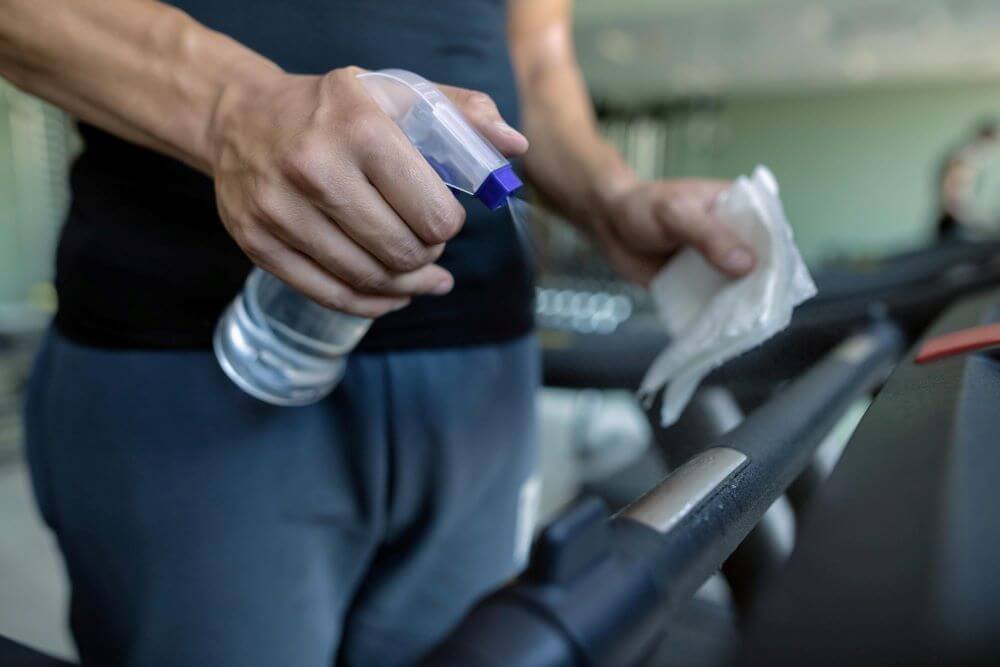
- Treadmill handrails, consoles and touchscreens
- Exercise bike handlebars and seats
- Weight machine handles and adjustment points
- Dumbbells, barbells and weight plates
- Exercise mats and shared training accessories
During trading hours, staff can inspect frequently used equipment and clean it according to the gym’s procedures. Members should also have access to suitable cleaning supplies and clear instructions for wiping down equipment after use.
Professional gym cleaning services can complement these daily habits by providing scheduled cleaning of equipment areas, floors, and other shared facilities.
How should change rooms, showers and toilets be included in the schedule?
Change rooms, showers and toilets need their own cleaning rotations because moisture, heavy use and waste can quickly affect their condition. A general floor-cleaning schedule will not cover every fixture or surface that requires attention.
A practical fitness centre cleaning plan should include:
- Change rooms: benches, lockers, floors, mirrors and frequently touched surfaces.
- Showers: floors, drains, screens, taps and visible soap residue.
- Toilets: bowls, basins, handles, partitions and consumable supplies.
- Wet areas: check for standing water, visible residue and maintenance issues.
Follow suitable product instructions and site procedures, particularly for wet floors and equipment surfaces. Record recurring problems such as blocked drains or persistent odours so they can be addressed rather than repeatedly cleaned around.
How can gyms schedule cleaning around classes and 24-hour access?
Cleaning should fit around member activity. In a class-based studio, the gap between sessions may provide a useful window for checking mats and shared equipment. A 24-hour gym may need staggered cleaning visits and planned checks throughout the day.
| Time | Recommended focus |
| Before opening or peak periods | Equipment, floors, amenities and supplies |
| Between classes | Mats, shared accessories and studio floors |
| Quieter daytime periods | Detailed surface cleaning and waste removal |
| Overnight or after staffed hours | Scheduled floor care and deeper cleaning tasks |
A reliable cleaning plan should account for actual usage patterns rather than assume every facility follows standard business hours. Cleaning teams should also follow the gym’s access, security and equipment-care procedures.
How does cleanliness affect the member experience?
Members notice cleanliness on every visit: a sticky bench, a smell in the change room, an overflowing bin or a shower drain that hasn’t been cleared. These are the details that come up in online reviews and at the front desk, and they shape how members feel about the gym when their membership is due for renewal.
Cleanliness is only one part of retention, alongside coaching, equipment, convenience and value. But a poorly kept gym gives members an easy reason to look elsewhere, while visible, consistent cleaning, such as a dated checklist in the change rooms, shows members the work is being done.
How can gym managers measure cleaning performance?
A written gym cleaning checklist makes it easier to confirm that scheduled tasks are completed and identify gaps. Managers should review the checklist regularly rather than relying only on whether the gym looks clean during a quick walk-through.
Track these practical indicators:
- Missed or incomplete tasks
- Member complaints about cleanliness
- Condition of change rooms and showers
- Waste removal and supply replenishment
- Equipment and floor maintenance issues
These checks help managers adjust cleaning frequency when membership, class schedules or operating hours change.
How DW Commercial Cleaning supports gym cleaning in Brisbane
DW Commercial Cleaning provides gym cleaning services across Brisbane. The team uses NCPS products, and its cleaners are AGAR-trained Blue Card holders. Cleaning plans cover high-touch equipment, mats, change rooms, showers and toilets, with floor polishing and odour control available where needed, and are scheduled around each gym’s classes and opening hours.
A site assessment helps establish priorities and suitable cleaning frequencies for the facility. For gym managers, this creates a practical starting point for aligning cleaning with class timetables, member traffic and the requirements of different training areas.
Frequently Asked Questions
1. How often should gym equipment be cleaned?
Frequently used equipment should be checked and cleaned regularly throughout trading, following the gym’s procedures and manufacturer instructions. Detailed cleaning should also form part of the scheduled routine.
2. What is the best time of day to clean a gym?
Quieter periods, gaps between classes and overnight windows can reduce disruption. The best schedule depends on member traffic, access arrangements and the tasks being performed.
3. How should change rooms and showers be cleaned?
Include benches, lockers, floors, drains, taps, shower screens, toilets and frequently touched surfaces. Set inspection frequencies based on usage and report maintenance issues promptly.
4. Does cleanliness affect gym member retention?
Cleanliness can influence members’ comfort and overall experience, particularly when equipment or amenities appear poorly maintained. It is one factor in retention alongside coaching, facilities, convenience, and membership value.
5. What should a gym cleaning checklist include?
A gym cleaning checklist should cover equipment, mats, weights, floors, change rooms, showers, toilets, waste and supplies. It should also identify cleaning frequencies and who is responsible for completing and checking each task.
6. Does DW Commercial Cleaning offer gym cleaning in Brisbane?
Yes. DW Commercial Cleaning provides gym cleaning in Brisbane, with schedules set around each gym’s classes and opening hours and a focus on equipment, change rooms and other high-use areas.
How can a consistent gym cleaning schedule keep members coming back?
A reliable fitness centre cleaning program combines daily equipment checks, scheduled amenity cleaning, appropriate floor care and documented quality reviews. The schedule should change as member traffic and operating hours change, rather than leaving busy areas to accumulate dirt between visits.
For tailored gym cleaning services, contact DW Commercial Cleaning to discuss your facility’s requirements, or call 1300 253 046.
About the author
David Lange, Director, DW Commercial Cleaning
David has led DW Commercial Cleaning for more than a decade, after 25 years in hospitality, sales and operations management. He and his team clean and maintain commercial and industrial sites across Queensland, including shopping centres, logistics sites, prestige car dealerships, office buildings and hospitality venues. He writes about what it takes to keep business premises clean, safe and presentable every day, whether it’s a single site or a portfolio of properties.