Arizona homes work harder than homes almost anywhere else in the country. The sun beats down for the better part of nine months, monsoon season arrives with a fury, and dust finds its way into every corner. Remodeling here is not just about aesthetics or resale value. It is about building a home that genuinely holds up to the environment outside its walls.
Why Arizona Remodeling Demands a Different Playbook
Most national remodeling advice is written for temperate climates. What works in Ohio or Oregon often falls flat in Scottsdale or Tucson. The desert imposes real physical demands on a home’s materials, systems, and layout that homeowners in milder regions never have to consider.
The energy burden alone tells the story. In Arizona, a quarter of the energy consumed by homes goes toward running an air conditioning unit, which is more than four times the national average. That number shapes every smart remodeling decision, from which windows to install to how a kitchen is oriented. Upgrades that reduce cooling load are not optional luxuries here. They are the foundation of a well-functioning home.
The Desert Climate Checklist
Before any contractor picks up a tool, Arizona homeowners benefit from thinking through how the climate affects each part of the house. Extreme UV exposure degrades paint, caulk, and certain plastics faster than anywhere else in the continental U.S. Thermal cycling, where temperatures swing dramatically between day and night, stresses building materials over time. Summer monsoon storms bring sudden moisture that can damage anything not properly sealed or graded.
Setting Priorities
The most effective approach is to sequence upgrades in a logical order: building envelope first, mechanical systems second, interior finishes last. Putting money into beautiful cabinetry before fixing a leaking roof or inadequate insulation is a common and costly mistake. The envelope, meaning the roof, walls, windows, and doors, determines how hard every other system in the house has to work. Get that wrong, and nothing else matters.
Windows and Insulation: The Envelope Comes First
Single-pane windows are still common in older Arizona homes, and they are essentially thermal holes in the wall. Replacing them with low-E, dual-pane units designed for high solar heat gain coefficient (SHGC) ratings makes an immediate, measurable difference. Frame material matters too. Vinyl and fiberglass frames outperform aluminum in desert heat because they do not conduct temperature as readily.
Insulation is equally important and often overlooked. Attic insulation is the highest-priority upgrade in most Arizona homes because heat accumulates up there and radiates downward throughout the day. Spray foam in the attic can cut that load considerably. In walls, blown-in insulation or rigid foam boards help, especially in homes built before modern energy codes were tightened. The goal is a tightly sealed envelope that keeps conditioned air inside and radiant heat outside.
Window placement also deserves attention during any addition or major renovation. West-facing windows are the enemy of comfort in Arizona. The late afternoon sun hits west walls at a low angle with maximum intensity, and no amount of air conditioning fully compensates. Repositioning windows, adding exterior shading structures, or installing motorized exterior shades on west-facing glass are all legitimate fixes.
Flooring and Interior Materials That Survive the Heat
Arizona buyers are drawn to continuous, durable materials like luxury vinyl plank, tile, or refinished hardwood that handle heat and dust. That preference is not just about looks. These materials genuinely perform better in a desert environment than carpet or laminate, which can warp, fade, or trap the fine particulate dust that blows in during haboobs.
Tile as a Workhorse
Porcelain and ceramic tile remain the dominant flooring choice in Arizona for good reason. They stay cool underfoot even when outdoor temperatures are brutal, they clean easily, and they hold up to the grit and sand that tracks in from desert landscaping. Large-format tiles, planks or slabs in the 24-by-48-inch range, have become increasingly popular because they cut down on grout lines and give spaces a cleaner, more modern look.
Countertops and Cabinetry
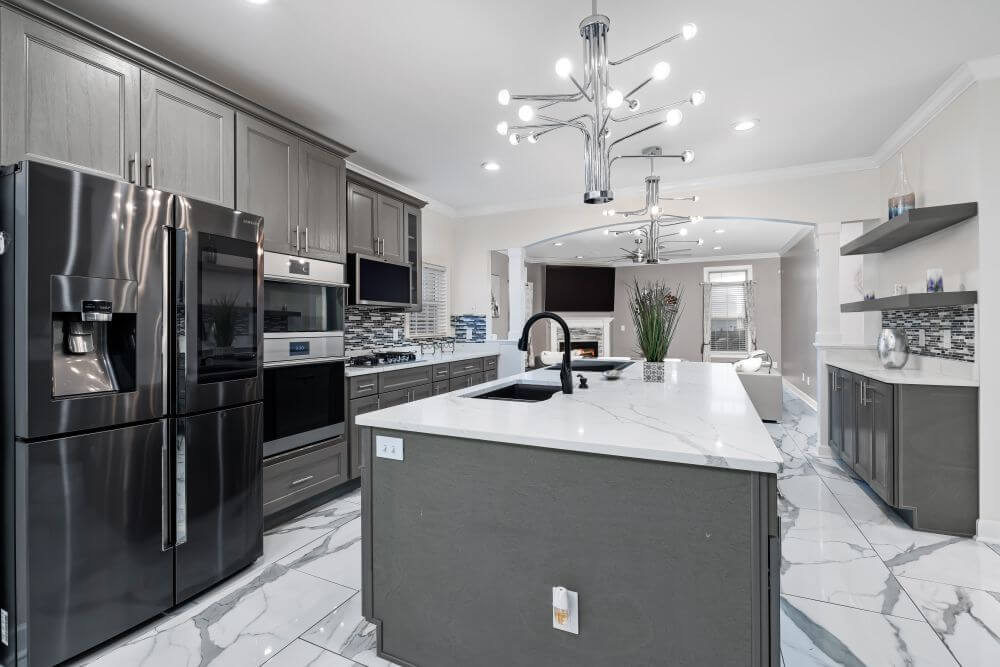
In kitchen remodeling projects across Arizona, quartz countertops consistently outperform natural stone in both kitchens and bathrooms. Granite requires regular sealing to resist the dry air and UV exposure that can cause hairline cracks over time. Quartz, being non-porous and engineered, holds up without that maintenance burden. For cabinetry, full-overlay door styles with moisture-resistant finishes handle the humidity swings of monsoon season better than older face-frame construction with standard finishes.
Paint and Wall Finishes
Exterior paint in Arizona should be a high-quality, 100-percent acrylic elastomeric formula. Cheaper paints chalk and fade within two to three years. Elastomeric coatings flex with thermal expansion and contraction, bridging small cracks and lasting noticeably longer between repaints. Interior walls benefit from low-VOC, scrubbable finishes that hold up to frequent cleaning without dulling.
Smart Home Technology Built for Desert Conditions
Smart thermostats are not just a convenience upgrade in Arizona. They are a legitimate tool for managing energy costs. Programmed correctly, they pre-cool a home before peak rate hours and let temperatures drift upward during the hottest part of the afternoon when utility demand charges are highest. Systems like smart thermostats, leak sensors, voice-activated lighting, and automated blinds are becoming standard requests from Arizona homeowners.
Automated blinds deserve particular attention. West and south-facing windows can be programmed to close automatically when the sun reaches a certain angle, cutting solar gain without any manual effort. Leak sensors are equally valuable in a climate where plumbing failures from thermal stress are common and water damage can escalate quickly in dry conditions that mask moisture behind walls. It’s a sneaky problem.
Outdoor Living Spaces That Actually Work
Arizona’s outdoor season is long, but it is not uniform. The sweet spot runs from October through April, and a well-designed outdoor space takes full advantage of those months while staying usable during shoulder seasons.
Shade Structures and Ramadas
Pergolas and ramadas are standard features in Arizona backyards for good reason. A solid-roof ramada blocks direct sun and can drop the temperature underneath by fifteen degrees or more compared to an unshaded patio. Aluminum and steel frames with powder-coated finishes outlast wood in the desert climate. Motorized shade sails add flexibility, allowing homeowners to open the space to winter sun while blocking summer rays.
Desert-Adapted Landscaping
Xeriscaping is not a compromise. Done well, it creates beautiful, low-maintenance outdoor spaces that use a fraction of the water traditional landscaping demands. Native plants like saguaro, palo verde, and desert willow are adapted to the soil and rainfall patterns, meaning they establish quickly and need minimal intervention once mature. Decomposed granite, flagstone, and concrete pavers all handle temperature extremes far better than a conventional lawn.
Energy Systems: Solar and Beyond
Changing energy needs have increased annual cooling costs for Maricopa County residents by an estimated 17% since 2000, and that trend shows no sign of reversing. Solar panel installations have become a standard part of Arizona remodeling conversations. With more than 300 sunny days per year, the payback period on a properly sized system is competitive with almost any other state.
A whole-home energy audit before any major remodel helps identify where the biggest losses are occurring. Duct leakage is a common culprit in Arizona homes, where ductwork often runs through unconditioned attic space. Sealing and insulating ducts can improve HVAC efficiency meaningfully without replacing the system itself. When replacement is warranted, variable-speed systems with high SEER ratings are worth the premium in a climate where the air conditioner runs for months without a break.
Where to Start
Arizona remodeling is most effective when it follows the logic of the climate rather than a national trend report. Start with the envelope, address the mechanical systems, and finish with the interior details that make a home feel like home. The desert is not forgiving of shortcuts, but homes built and renovated with it in mind are genuinely comfortable, durable, and efficient in ways that homes in other climates rarely achieve.