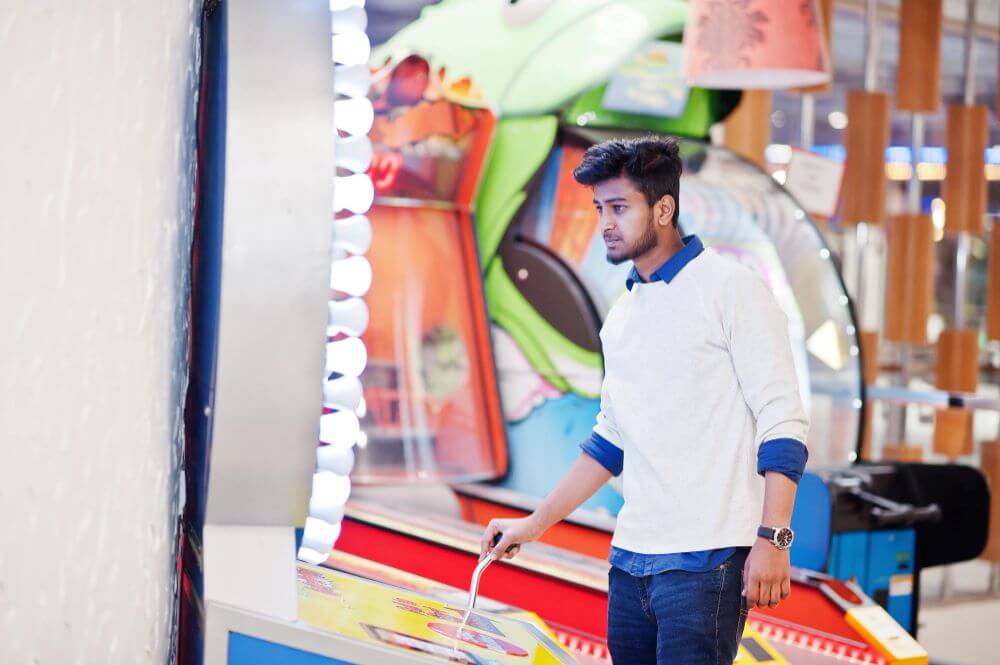
Experiential marketing has matured from a novelty into a hard-nosed line item that CFOs expect to justify. Brands no longer win attention simply by showing up with a step-and-repeat and a decent cocktail menu. They win by engineering moments that feel earned, shareable, and oddly personal, even when delivered at scale. In that environment, the humble carnival game has returned as a surprisingly sophisticated tool.
Carnival games work because they translate a brand promise into something people can touch and test. A visitor who might ignore a product demo will gladly take a shot at a ring toss or a high-striker, especially when the rules are simple and the reward is immediate. The game becomes a micro-story with stakes, tension, and a payoff, which is more than most booths can claim. When designed well, it also becomes a brand’s shorthand for joy, challenge, or mastery.
The rise of branded carnival games signals a broader shift in event strategy toward participation over presentation. Audiences have learned to tune out messaging that feels like messaging. They still lean in when they feel like protagonists rather than spectators. A well-built game gives them that role without asking for much, which is precisely why it is so useful.
Why Games Outperform Static Installations
Static installations can be beautiful, but beauty does not always create involvement. A glowing wall of LEDs might stop someone for a photograph, yet it rarely asks them to do anything beyond pose. Games, by contrast, introduce agency. They create a reason to stay, to try again, and to pull a friend into the scene.
Participation also changes the way people talk about what they experienced. Instead of saying, “I saw the brand,” they say, “I beat the game,” or, “I almost won, you should try.” That language is more contagious because it carries emotion, not just observation. It also becomes a natural prompt for user-generated content that feels authentic, because the moment belongs to the participant.
Games can also structure traffic flow and dwell time in ways that marketers can measure. A queue signals demand and social proof, while a short play cycle keeps throughput high. You can calibrate the experience to your audience, your venue, and your staffing plan, which is harder to do with installations that function as passive backdrops. In a world where attention is the most contested resource, that control is valuable.
The Psychology of Play in Adult Spaces
Play is not only for children, and in adult environments it can be even more potent. It lowers defenses and makes strangers more willing to interact. That shift matters at conferences, brand activations, and corporate gatherings where people arrive with professional armor. A game gives them permission to loosen up without feeling unprofessional.
Competition adds a mild adrenaline that improves memory formation. People remember what they felt, and games are designed to produce feeling in small, repeatable bursts. The joy of a win, the humor of a near miss, and the camaraderie of spectatorship all create emotional tags that attach to the brand present in the moment. This is not manipulation so much as human nature harnessed through design.
As brands lean into play, many discover that the creative idea is only half the job. The other half is execution: making games that look premium, work reliably for hours, and move people through safely without breaking the mood. That practical reality is why experienced operators and fabricators have become part of the modern event toolkit. When the craft and operations are handled well, the marketing can feel effortless.
Designing Branded Carnival Games That Feel Premium
Not all carnival games belong in a modern brand environment. The difference between “kitschy” and “elevated” often comes down to materials, typography, and the coherence of the story. Premium brands need games that feel like objects, not props, with finishes that look at home beside high-end product displays. A game should feel as intentional as a flagship store.
The second ingredient is mechanics that match the brand narrative. A sustainability brand might design a game around balance and resource management rather than brute-force competition. A performance brand might favor timed challenges and visible scoring. The goal is not to plaster logos on plywood, but to translate brand values into the way the game behaves and how it rewards effort.
Operational details matter as much as aesthetics. Games should be intuitive within seconds, but still offer skill progression. They should be accessible to different ages and abilities, and they should avoid rules that require lengthy explanations. When staff can coach quickly and consistently, the brand experience becomes smooth, which is often what separates a polished activation from a chaotic one.
Strategic Partnering and the Turnkey Advantage
Brands frequently underestimate how hard it is to produce games that are both beautiful and durable. They also overlook the operational reality: transport, setup, staffing, maintenance, crowd control, and the small but inevitable surprises that appear when hundreds of people touch the same object. The partner you choose determines whether the activation feels effortless or improvised. In experiential work, improvisation is rarely charming. The difference shows up fast in the details, from wobbly hardware to unclear rules that slow the line and fray the mood.
A specialized partner can bring design and execution under one roof, which reduces the friction that often kills ambitious concepts. For event teams, this matters because timelines are tight and internal stakeholders want certainty. Working with an operator who has already solved logistics, safety, and throughput can free the brand team to focus on storytelling, data capture, and hospitality. The activation then becomes a system, not a set of disconnected parts. When the venue doors open, that systems thinking is what keeps the experience consistent from the first guest to the last.
In practice, selecting the right partner often starts with looking at how they think, not just what they build. A strong portfolio demonstrates whether the team can deliver purpose-built carnival games that fit a brand’s tone, from premium minimalism to high-energy spectacle. It also shows whether they have solved repeatable problems, such as fast resets, durable components, and crowd management under peak traffic. One example is Something New, which designs playful entertainment with production and operations in mind. Its portfolio of brand-aligned carnival games offers a clear sense of what it takes to execute these experiences reliably. That combination is what allows a playful concept to feel effortless to guests. Without it, even a good idea can unravel quickly.
Measuring Impact Beyond the Photo Opportunity
Event marketers often default to vanity metrics because they are easy to collect. Photos, impressions, and foot traffic can be useful, but they do not capture the quality of engagement. Games offer richer measurement opportunities because they create repeatable actions. Attempts, completions, scores, and time-on-station can all become proxies for interest.
The best measurement plans begin before the first guest arrives. What behavior matters most, and what does success look like for the brand? If the goal is lead generation, the game can be paired with a simple opt-in to claim a prize or enter a sweepstakes. If the goal is product education, the game can require a quick decision that mirrors the product’s value proposition, making the learning feel incidental.
Post-event analysis should connect game participation to downstream outcomes. Did participants convert at a higher rate than non-participants? Did they spend more time at the activation? Did they share more content, and was that content positive? A game can be entertaining and still accountable, which is a combination executives appreciate. The measurement discipline also informs iteration, letting teams refine mechanics and messaging over time.
Integrating Games Into the Full Event Journey
A carnival game should not be a lonely island on the show floor. It works best when integrated into the guest journey from invitation to follow-up. Pre-event messaging can tease the challenge, offer early sign-ups, or hint at prizes that align with the brand. That anticipation raises attendance and creates a sense of narrative continuity.
On-site, games can act as anchors that pull people through a space. They can be used to introduce new products, to break up dense programming, or to create informal networking zones. A well-placed game often becomes a social engine, giving attendees something to do together when conversation stalls. In B2B settings, that can be a surprisingly powerful antidote to awkwardness.
After the event, the game can live on through content and community. Leaderboards, highlight reels, and participant stories can become post-event assets that feel organic because they were created by real moments. Follow-up emails can reference the experience in personal terms, such as a score or a shared challenge, which is more engaging than generic recap language. This is how an activation becomes a relationship rather than a one-night stand.
Risk, Safety, and Brand Governance
Games introduce motion, competition, and crowds, which means they also introduce risk. The operational plan must address safety, accessibility, and clear boundaries. Staff should know how to manage lines, handle disputes, and spot hazards. Brands that ignore these details often find that a playful idea can become a logistical headache.
Brand governance also matters because games can slip into themes that feel dated or exclusionary. Prizes, language, and mechanics should be reviewed through a modern lens. A game that relies on embarrassment or aggressive competition may not fit brands that emphasize wellness, inclusion, or emotional safety. The goal is to generate energy without generating regret.
Finally, there is reputational risk in anything that looks cheap or disposable. A poorly made game can signal that the brand cuts corners, which is a message no marketer intends to send. Quality materials, thoughtful design, and competent staffing are not luxuries in this context. They are the price of admission for play that feels intentional.
Where Branded Carnival Games Are Headed Next
The next wave will likely combine analog charm with digital intelligence. Expect more RFID check-ins, score capture, and personalized follow-up that feels earned because it is tied to a real action. Yet the core appeal will remain physical. In a world saturated with screens, the tactile nature of a game is part of the value.
Brands will also become more ambitious about narrative design. Rather than one-off stations, they will build connected “quests” across an event, where each game unlocks the next experience. This structure increases dwell time and encourages exploration, while still feeling like fun rather than forced engagement. It borrows from gaming without requiring anyone to be a gamer.
Most of all, the category will professionalize further. As more brands see the results, expectations will rise for craftsmanship, inclusivity, and measurement rigor. Branded carnival games will no longer be seen as cute add-ons, but as engineered experiences that can carry serious strategic weight. The smartest teams will treat play as a business tool, and they will design it with the same care they apply to everything else.